Okay, let’s open up your marketing tool kit really quick and make sure you have all of the following:
- 7 principles to help you create better relationships with your readers
- 1 outline of your weekly schedule so you know how much time you have for marketing
- 6 details about your overall target market
- 1 completed profile of your one crazy-dedicated fan
- 1 long-ish list of places you can find readers on and off the web
- 5 best places (ranked by your handy score sheet) to meet your crazy-dedicated fan
So, in other words, you should know who your readers are, where to find them, how to engage with them and what kind of time you have to spend with them.
Now we just need to bring the whole puzzle together!
BUT FIRST, we have two bonus tools you need to make sure you’ve got in your kit as well before we head to the trenches.
 1. A clean, clear foundation

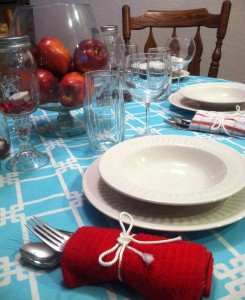
Think of it like this — you’re about to go out and make some new friends and invite them over to your place for a dinner party. Would you do that if you knew your house was a mess and you didn’t have a menu planned? Of course not! So before you ask people to visit your website, blog or Facebook page (wherever you’ve decided to send them) make sure you’ve got things in order.
Here’s a quick checklist:
- If your book is already published, do you have clear links/graphics/text pointing readers to where they can buy it?
- If your book is not yet published, do you have summary and some sort of progress report to start building momentum?
- Is your contact info (social media, email, etc.) easy to find?
2. An eye on your legacy
While searching for Twitter tips to share with clients at my day job recently, I came across something worth passing on to you guys as well. It’s important to keep in mind that everything you put out into the great big webiverse will likely stick around for years to come. Google searches can pick up tweets, blog comments, Facebook posts, etc. So be sure that whatever you choose to say out there is something you want to be part of your online legacy.
Alright, now we’ve got you loaded down with all the tools you need to build your career, let’s figure out how to put the whole package together!
The following is a guide to how you can engage with readers in different arenas — you do NOT have to use all of them, just focus on the five you identified with your scorecard from Lesson 6.
Blogs: Read, Comment, Repeat
Blogs are probably the easiest, least time consuming way to jump into a new community. All you have to do is find a couple of great blogs where your readers hang out and jump in the conversation by leaving some comments.
But wait! Don’t just comment on what the author said in his/her post, respond to other commenters. Compliment them if they made a good point, ask follow up questions, or if you disagree you can (calmly, respectfully) explain why you have a different opinion.
After you’ve established yourself as a frequent commenter on a particular blog, you may want to ask the blogger if you can post a guest-blog (for more on that, read our guide to being a guest posting rockstar).
- Time-saving Tip: Grab a good (free) reader service like Google Reader and import the RSS feeds so you’ll get updates on new blogs as they come out — you can even download one for your smartphone so you can keep up with the blogs you follow on the go (if you just got completely lost with all that techie jargon, just bookmark the blogs where your readers hang out and make a point to stop by once a day or so).
- DO: Always make sure you fill out the complete commenting form when leaving a blog comment! Register for Disqus or use a Google account where possible, but always (ALWAYS) leave your website link so people know where to find you.
- DO NOT: Go nuts promoting your own stuff on someone else’s blog. Be part of the conversation, don’t start your own.
Facebook: Talk and stalk (in a totally non-creepy way)
By now you probably have a personal Facebook profile for connecting with friends and family (and maybe stalking old classmates and exes to see what they’re up to…nothing wrong with that). But you should also have a separate Facebook Fan Page for your marketing.
 Once you’ve got your page set-up with a nice cover photo and profile picture, browse for other pages where your crazy-dedicated fans hang out and like them so they’ll show up in your news feed. From there it’s just a matter of jumping on once or twice a day to like and comment on other pages’ posts and add something unique to your page.
You should also post to your own page, whether it’s sharing links, photos, quotes or other insights that your readers would like to read.
- Time-Saving Tip: Create a fan page for you as an author, not for a specific book. I made this mistake only to realize it would lead to keeping up with multiple pages once I’d released multiple books — not efficient. Go with the overall author page, then you just share things about specific books as they are released.
- DO: Photos are king on Facebook. Comment on photos, they usually get the most shares and comments and post photos of your own. Your pictures don’t just have to be of your book, it can be anything you think your fans would like.
- DO NOT: Go on another person’s fan page and just post your information on their wall. Ever. The more genuine way to reach their fans is to respond to their posts with comments and likes.
Twitter: Tweet, retweet, but don’t repeat
Ah, Twitter. The best and worst social media network ever invented. If you’ve reached a point of utter frustration with it, fear not! Sanity can be restored to the Twitterverse.
First, you should probably go through and purge your list of followers. A good site like FriendorFollow can help you find out who’s not following you in return, that’s a good place to start. Otherwise, just cut out the spammers, the other authors who you aren’t either learning from or networking with, and anyone else who’s not part of your marketing plan or circle of friends.
Once that’s done, make sure you’re following the people and organizations your fans are into. Jump in the discussion on certain topics, not just with retweets but your own insights as well. Questions are a great way to break the ice, if you see a question in your feed that you can answer, go right ahead!
- Time-Saving Tip: Use a service like HootSuite to sort people or topics you follow into separate feeds, that way you won’t lose your mind sifting through a buttload of tweets every day!
- DO: Fill out your Twitter profile completely with photo, website link, etc. You should also try to keep your tweets to around 120 characters or less where possible so there’s room for someone to do an easy RT.
- DO NOT: Contribute to the spam by scheduling the same tweet over and over or getting caught up in the never-ending “thank you” circuit especially for #FF tags.
Pinterest: Pining for pins
Pinterest is such a baby in the social media world that marketers are still learning the best way to use it. Because 70% of its users are women, it’s definitely only going to be applicable for certain genres (chick lit or YA, for example, could turn Pinterest into a goldmine).
Re-pin at least two-thirds of what goes onto your boards and only add your own stuff about 1/3 of the time. Pin things that are relevant to your book/genre whether it’s recipes, outfit ideas, décor, anything your reader would be interested in. You can also like and comment on pins just like you can with posts on Facebook.
 Interact with others and follow their boards as well. This can be a GREAT way to get to know your reader—if you find a few of your readers and follow them they will give you insight into all of their favorite things!
- Time-saving Tip: Set a timer for yourself when you go on Pinterest and as soon as it goes off, you need to leave the site. Seriously, do this or you will find yourself suddenly unable to account for large chunks of time in your life.
- DO: Always (ALWAYS!) write your own message when you re-pin something.
- DO NOT: Go crazy with the promotions – Pinterest is still picky about people using their program for promotions, at least the generally sleazy ad types. Pinterest is all about being creative, it’s content marketing at its best.
Forums: Fabulous forays into new friendships
Back in the day, forums were the place to go to meet people and they’re still a great way to interact with a new community. The best advice for entering a new forum is to spend your first few visits just reading. Make note of the sort of humor that’s accepted, what kinds of comments seem to get the most (positive) attention, and who frequents the forums most.
Longtime members of forums hate (HATE) when people create redundant threads or make comments that have already been made because they didn’t read the entire thread before adding a comment. You should also only pick the topics that interest you or that you have some knowledge about.
When you’re ready to start creating your own threads, choose a headline that will draw people in. Keep your topic in line with the theme of the forum and respond kindly to those who post on your thread. Sometimes people can lose their minds in forums, so just stay civil and avoid confrontation if you should run into it.
- Time-saving Tip: Limit yourself to one or two forums at most. It takes a lot of time to keep up with new topics and threads. Forum members are big on respect and loyalty, so it’s better to really get to know people in one forum than casually participate in a handful.
- DO: Have a unique signature and avatar (but don’t go nuts with gifs and smiley faces).
- DO NOT: Blatantly promote your book. You will get booted! Participate in the conversation and if people like what you have to say, they’ll ask for more information and seek you out.
Offline Sources: Face-to-face meetings are golden opportunities
• Book Clubs
Contact book clubs to offer a visit to discuss your book! Offer a discount (you can sometimes create coupons for eBooks or if you have a stash of paperbacks you can just offer them at a group rate) or even a free book or two as incentive. You can even skype with book clubs outside your area!
• Seminars
Some publishing/book seminars will sometimes have a marketplace for writers to sell books at assigned booths. Check into these, though there might be a high cost, it can be a great avenue to getting your name out there! Be prepared that you might not sell a lot of books, but you can get your name into the heads of new readers. Be kind and if you get a few visitors to your table, strike up a conversation with them – don’t just sign a book and send them on their way.
• Schools
If you’re a YA author, reaching out to your readers in person has to be done with caution, so you don’t seem creepy (or worse, totally uncool). Reach out to local English or Creative Writing teachers to offer to speak in their class about writing, self-publishing or another topic related to their curriculum. Don’t ask to come in and just speak about your book, but certainly mention your book and tie in your experience writing/publishing it where appropriate.
8 ways to reach your readers — now start with one!
At this point, your media tool box should be getting really heavy.
We just laid our eight guides to getting to know your readers, but you know we don’t expect you to do all of them. It’s time to apply your scorecard from Lesson 6 so you know the best five places for you to spend your limited time meeting new fans.
Homework:
Pick just one of the guides above, head to that location to get started!
Discussion:
Share with the class! We want to know which method you chose to try first. Is it different than what you’ve done in the past to meet new readers? Did you enjoy getting involved this way?
